
Beyond Growth: Europe’s Cities Rewrite the Rules of Tourism
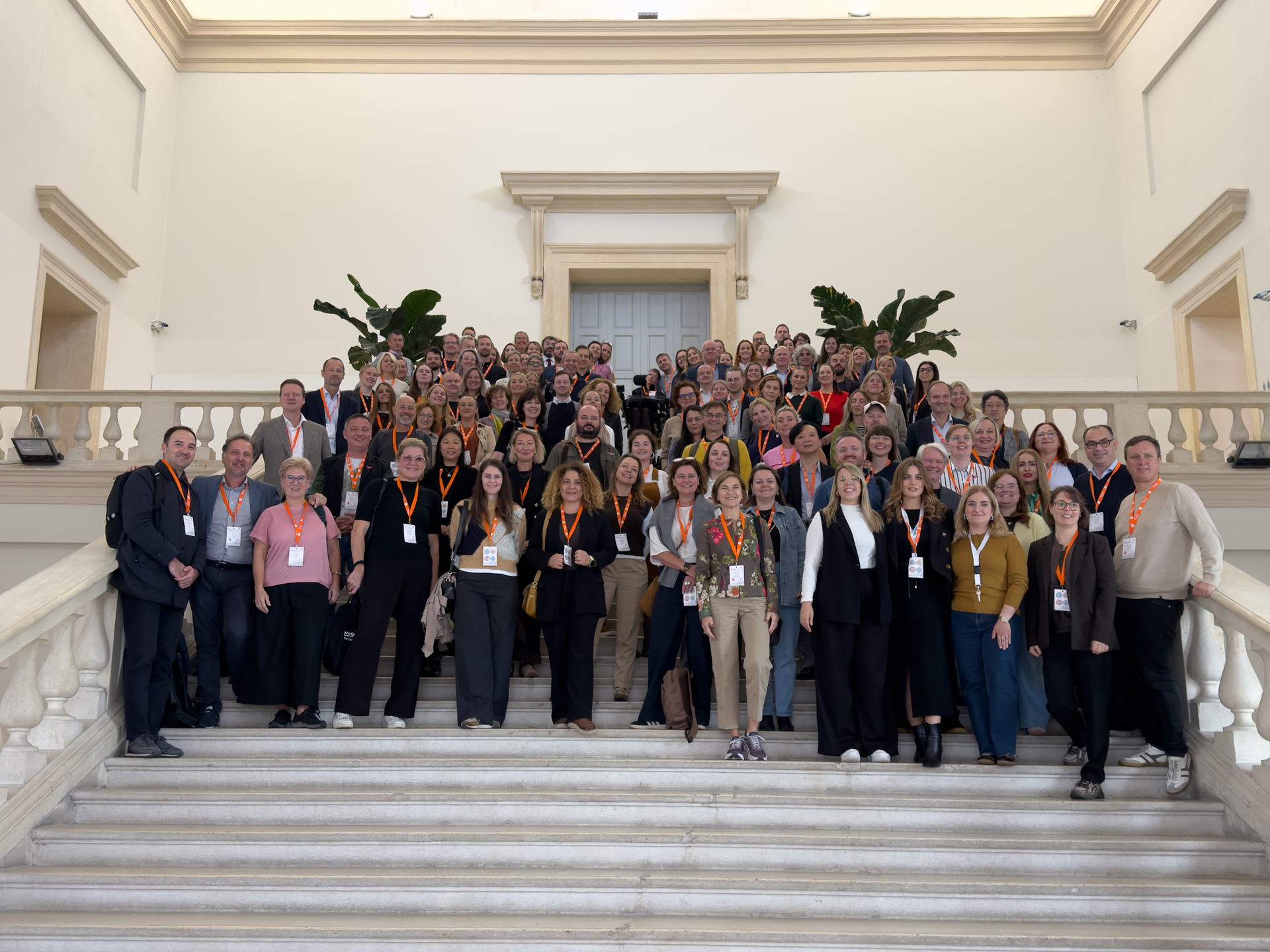
At its Autumn Conference in Verona, City Destinations Alliance (CityDNA) set out how Europe’s city destinations are responding to AI, climate pressure, tourist taxation and the question every city now faces: who is tourism really for?
Europe’s city destinations are no longer asking how to attract more visitors. They are asking what tourism should leave behind. That was the defining message of the CityDNA Autumn Conference 2026, “Moving Together – Cities in motion. Destinations in alignment.” Held in Verona from October 19-21, 2026, it brought around 160 destination leaders from across Europe together to shape the next chapter of urban tourism.
As the European alliance of city DMOs and CVBs, CityDNA brings together the data, the expertise and the collective voice of Europe’s cities. In Verona, the Alliance presented new evidence and member-driven thinking on the issues now defining the visitor economy: the shift from volume to value, the impact of artificial intelligence, mobility and accessibility, climate resilience, and the transparency of tourist taxes.
Five questions Europe’s cities are now asking
Is growth still the goal? The City Travel Report by CityDNA 2025-2026, covering a record 141 European cities, shows city tourism entering a period of recalibration after the post-pandemic recovery. Bednights are still growing, but performance between destinations is diverging sharply. The conclusion: growth must be measured against local objectives, not volume alone.
Can AI replace destination intelligence? No, argued delegates. As generative AI reshapes how travellers search and decide, verified data, human interpretation and local knowledge become more valuable, not less. CityDNA’s Trend Room presented four possible futures for DMOs in an AI-driven world, urging destinations to prepare for each.
Where does the journey really begin? Research presented in Verona shows that transport options increasingly influence destination choice. Connectivity is now part of the visitor decision long before arrival, making mobility a strategic tourism issue, not just an infrastructure one.
Who feels welcome in our cities? Accessibility was framed not as compliance but as a principle that shapes the entire visitor experience, and the everyday interactions that decide whether someone feels genuinely welcome.
Where does the tourist tax go? New findings from the CityDNA City Tax Project, developed with Modul University Vienna and based on 53 cities, reveal major differences in how tourist taxes are governed, allocated and communicated, and a gap between stated policy priorities and the actual use of revenues. Transparency and value for residents emerged as central issues. Further benchmarking through TourMIS and additional qualitative research are planned.
Why we travel, and why it matters
Opening the conference, keynote speaker David Meade “Why We Move?” challenged destinations to look past their attractions and towards the deeper motivations behind travel: autonomy, mastery and purpose. The destinations that succeed, he argued, will be remembered for how they make people feel.
Closing the conference, Jeremy Smith, Co-Founder of Tourism Declares a Climate Emergency, called on the sector to match technical climate action with stronger storytelling. Tourism, as an industry built on lived experience, has a unique power to help people imagine and connect with more resilient futures.
The CityDNA MarCom Survey 2026 confirmed that the same shift is reshaping destination marketing: a growing focus on attracting more engaged visitors, supporting local sectors, managing visitor flows and adapting to AI-driven search, discovery and new forms of measurement.
Beyond the meeting room
Verona was not a conference confined to a meeting room. Four small-group walkshops took delegates into the city: testing accessibility through real encounters, mapping the increasingly complex visitor journey, asking what tourism should ultimately create for cities, and walking along the Adige and across Ponte Pietra to discuss climate resilience and the stories destinations can tell about change.
Members then led three workshops on mobility, accessibility and AI, bringing their own cases and challenges to the table. The outcomes will directly inform CityDNA’s 2027-2030 strategy, the Alliance’s roadmap for how Europe’s city destinations will work together in the years ahead.
“What stood out in Verona was the willingness of our members to turn discussion into collective action,” said Maya Janssen, Vice-President of City Destinations Alliance. “CityDNA’s strength lies in the knowledge, experience and connections of its members. The conversations around mobility, accessibility, AI, governance and long-term value reinforced a shared ambition: to shape the future of our cities together. These insights will help guide both the next steps for our destinations and the future direction of the Alliance itself.”
“Hosting CityDNA in Verona gave us the opportunity not only to welcome colleagues from across Europe, but also to put many of the questions we are working on locally into a wider European conversation. Mobility, accessibility and inclusion are increasingly central to how we think about the visitor experience. The conference showed the value of bringing cities together to compare approaches, challenge one another and develop new ideas.” added Luca Caputo, General Manager of Destination Verona & Garda Foundation.
A European network, a shared agenda
The conference was hosted by Destination Verona & Garda Foundation and Verona Garda Convention Bureau, and moderated and facilitated by SoolNua. Speakers included representatives from VisitAarhus, amsterdam&partners, Stad Antwerpen, Visit Belfast, Fondazione Bologna Welcome, Fáilte Ireland – Dublin, Destination Florence, Gdansk Tourism Organisation, Comune di Genova, Visit Gent, Helsinki Partners, Innsbruck Convention Bureau, Visit Košice, Lausanne Tourisme, Turismo Torino e Provincia and Destination Verona & Garda Foundation.
Partners and collaborators contributing research, data and technology expertise included Amadeus, Black Diamond, the European Transformative Futures Institute (ETFI), GetYourGuide, Granicus Destinations, Mash Media Group, MMGY TCI Research, Modul University Vienna, Place Generation, Quantitas, Rome2Rio, Sojern, Tourism Declares a Climate Emergency and TravelDesk Global.
……………………………………………………………………………………………………………
Stay Connected with CityDNA
Save the Date – Bremen 2027
Join us for the CityDNA International Conference & General Assembly, from April 14-16, 2027 in Bremen, Germany.
Join the CityDNA Community
Discover how CityDNA membership connects European city destinations, fosters knowledge exchange and supports collective action.
Meet Us at IBTM World
Attending IBTM World in Barcelona? Join the CityDNA CVB Café on November 16, 2026 to connect with peers and exchange ideas ahead of the show.
……………………………………………………………………………………………………………
Notes to editors
Key facts:
- 160 delegates
- City Travel Report covering a record 141 European cities
- City Tax Project based on 53 cities
- CityDNA 2027-2030 strategy in development
……………………………………………………………………………………………………………
About City Destinations Alliance (CityDNA)
We are a knowledge sharing network for cities and urban regions collaborating to maximise the potential of the visitor economy. Our vision is for all cities in Europe to flourish as great places to live, work, meet and explore. As a community of professionals, our promise to each other is to always be curious and forward thinking, share our inspiration and continued learnings.
For more information and pictures, please contact:
Bénédicte Lack, press@citydna.eu, +33 380 56 02 03
citydestinationsalliance.eu